Poloniex Taxes: How to Import Your Transactions & Generate Your Tax Report
Poloniex is one of the original altcoin exchanges, founded in 2014. Now operating from the Seychelles, it offers spot trading, margin, lending and staking across hundreds of trading pairs. CoinTracking imports your complete Poloniex history via API or CSV and generates a jurisdiction-specific tax report covering all trades, income and transfers.

How to Import Your Poloniex Transactions into CoinTracking
Watch how to connect your Poloniex account to CoinTracking via API key or CSV upload and generate your complete crypto tax report in minutes.
Start Your Free Poloniex Import- Every spot trade, margin settlement, lending income and staking reward on Poloniex is a taxable event in the year it occurs. Tax compliance is your personal responsibility in your country of residence.
- CoinTracking supports both Poloniex API and CSV import. Connect via read-only API key for automatic syncing, or upload a manually exported CSV. Spot trades, margin, lending, staking and withdrawals are all supported.
- Transferring crypto between your own wallets is generally not a taxable event. Only crypto disposals — selling, trading or spending — trigger a tax obligation. Internal transfers between your own Poloniex accounts are generally non-taxable.
- Tax compliance is your responsibility. Poloniex is incorporated in the Seychelles and is not an EU-regulated CASP subject to DAC8. Your tax authority will not receive automatic reports from Poloniex. You are required to report all taxable gains and income from your Poloniex activity in your annual tax return.
Poloniex and Your Crypto Tax Obligations
Poloniex is one of the earliest altcoin exchanges, founded in 2014 in the United States. It quickly became a go-to platform for trading a wide range of cryptocurrency pairs during the early altcoin era. In 2019, Poloniex was acquired by Justin Sun and the Tron Foundation, after which it relocated operations to the Seychelles. US users have been blocked from the platform since the 2019 acquisition.
Today, Poloniex operates from the Seychelles as a global exchange serving international users. It offers spot trading across hundreds of pairs, margin trading, crypto lending and staking — with a particular focus on the TRON ecosystem and its associated tokens. Poloniex is not subject to EU DAC8 automatic reporting obligations, meaning your tax authority will not receive automatic reports of your Poloniex activity.
Poloniex traders need to account for:
- Spot trades (crypto to crypto or crypto to fiat disposals)
- Margin trade settlements (generally capital gains; jurisdiction-specific treatment)
- Lending income (generally taxable as income in the year received)
- Staking rewards and referral bonuses (generally income)
- Deposits and withdrawals (to/from other exchanges and wallets)
Crypto Tax Basics for Poloniex Traders
Poloniex is used by traders in many countries. Here are the key tax rules that apply in major jurisdictions — including notes on margin trading and lending, which may be taxed differently from spot trades.
Spot trades as disposals
In most countries, spot crypto trades are treated as capital asset disposals and taxed as capital gains. Every trade — whether selling crypto for fiat or swapping one crypto for another — is a taxable event. The gain or loss is calculated as the difference between the sale proceeds and your cost basis (what you paid for the asset). CoinTracking tracks your cost basis across all Poloniex trades and computes gains automatically.
Margin trading
Margin gains and losses are generally treated as capital gains or losses, but jurisdiction-specific rules apply. In the US, ordinary income treatment may apply to certain short positions in some cases. In Germany, margin trading on crypto may be treated as a private disposal (§ 23 EStG) or potentially as Kapitalerträge — the specific treatment depends on the product structure. CoinTracking imports margin data from Poloniex and handles the gain/loss calculation; consult a qualified advisor for the exact treatment in your country.
Lending income
Lending interest earned on Poloniex is generally treated as ordinary income in the year it is received. The market value of the interest at the date of receipt forms your cost basis for any future disposal. CoinTracking imports all Poloniex lending income and classifies it correctly in your tax report.
DAC8 and Poloniex
The EU DAC8 directive requires EU-regulated crypto-asset service providers (CASPs) to automatically report transaction data to EU tax authorities from 1 January 2026. Poloniex is incorporated in the Seychelles and is not subject to DAC8. EU residents trading on Poloniex must self-report all activity — it will not be reported on their behalf by the exchange.
Poloniex Taxes by Country
Key crypto tax rules for countries where Poloniex is most commonly used. Select your country for specific rates and requirements.
 Germany
- § 23 EStG: Spot gains taxed at personal rate (up to 45%) if sold within 1 year; tax-free if held over 1 year
- Annual exemption: €1,000/year in private disposal gains
- Margin trading: May qualify as Kapitalerträge (25% + solidarity) — seek professional advice
- Lending income: Taxable as income under § 22 EStG or § 20 EStG depending on product structure
- Cost basis: FIFO per wallet
- Forms: Anlage SO (spot) / Anlage KAP (margin/lending — confirm with advisor)
 Austria
- 27.5% KeSt: Flat rate on crypto disposals (assets acquired after 28 Feb 2021)
- Authority: Finanzamt Austria
 United Kingdom
- Capital Gains Tax: 18% (basic) / 24% (higher) from October 2024
- Annual exempt amount: £3,000 (2024/25)
- Cost basis: Section 104 pooling (HMRC)
- Authority: HMRC
 United States
- Note: US users have been blocked from Poloniex since the 2019 acquisition by Justin Sun / the Tron Foundation. If you traded on Poloniex prior to 2019, historical gains must still be reported.
- Short-term gains: Ordinary income rates (up to 37%) for crypto held ≤1 year
- Long-term gains: 0%, 15% or 20% for crypto held >1 year
- Cost basis: FIFO or specific identification
- Authority: IRS
 Australia
- CGT discount: 50% CGT discount for assets held over 12 months (individuals)
- Authority: ATO (Australian Taxation Office)
 Netherlands
- Box 3 wealth tax: Crypto declared as assets; effective rate ~1.2–2% of year-end value
- No realised capital gains tax for private investors
- Authority: Belastingdienst
 Poland
- 19% flat rate: Capital gains from crypto taxed at 19% flat rate
- Annual exemption: Losses can be carried forward for 5 years
- Authority: Urząd Skarbowy (tax office)
Tax rules change frequently. This overview is for general information only. Consult a qualified advisor for your specific situation.
Are Poloniex Transactions Taxable?
In most jurisdictions, Poloniex spot trades, margin settlements, lending income and staking rewards are taxable events. Use this as a starting reference — exact rules vary by country.
Taxable Events
- Selling crypto for fiat on Poloniex
- Trading one crypto for another (spot)
- Margin trade settlements
- Lending income (as income in year received)
- Staking rewards (as income)
- Referral bonuses (as income)
Not Taxable
- Depositing crypto from your own wallet to Poloniex
- Withdrawing crypto back to your own wallet
- Holding crypto in your Poloniex account
- Internal transfers between your own Poloniex accounts
Tax treatment varies by country. Margin and lending products may be treated differently from spot trades — verify with a qualified advisor.
How to Calculate Your Poloniex Taxes
Poloniex traders who use spot, margin and lending products can accumulate complex transaction histories that are difficult to calculate manually. Margin settlements require entry and exit prices; lending interest accrues continuously. Missing any transaction leads to incorrect gain calculations and potential compliance issues.
CoinTracking connects directly to Poloniex via API to automatically import your complete transaction history — including spot trades, margin, lending income, staking rewards and withdrawals. It applies your chosen cost-basis method (FIFO, LIFO, HIFO), draws on historical market prices, and generates a jurisdiction-specific tax report ready for your accountant or tax authority.
How to Import Poloniex into CoinTracking
Three steps to import your Poloniex data and generate your tax report — via API or CSV.
- 1
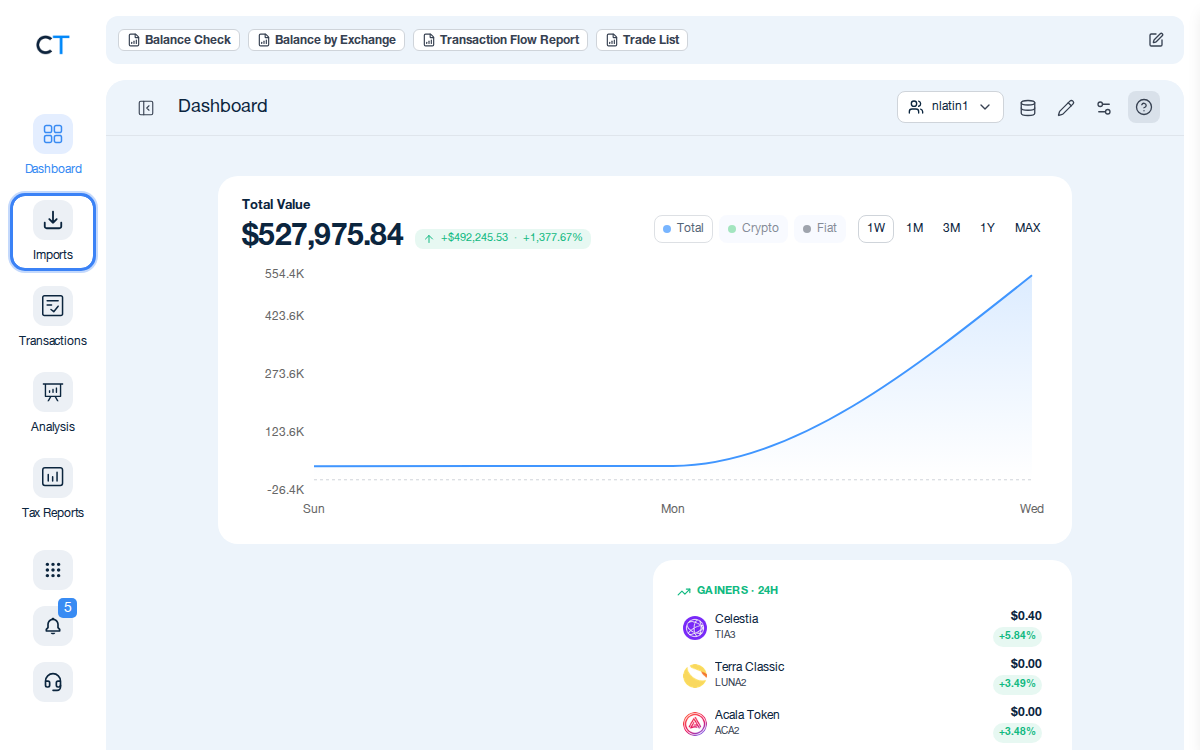
Log into CoinTracking and open Imports
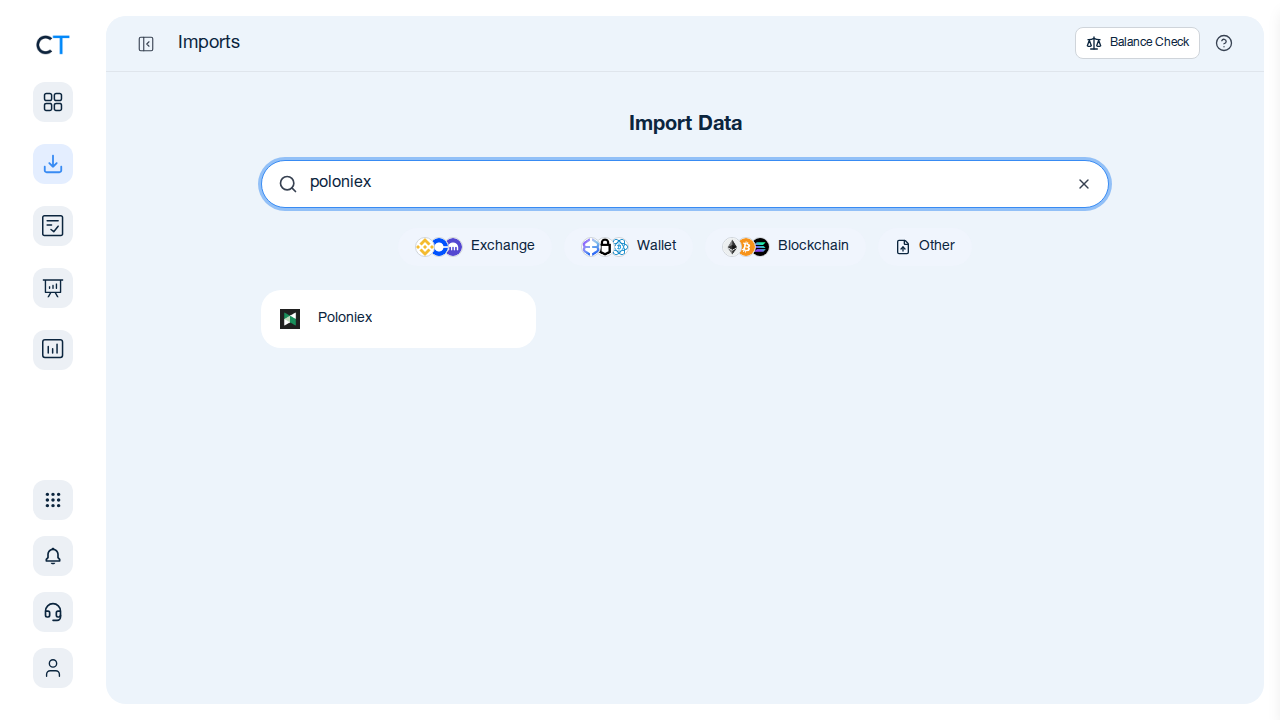
After logging in, click the Import icon in the left navigation. This is where you add all your exchanges, wallets and blockchains. Search for Poloniex to start.
- 2
Connect via API key or upload your Poloniex CSV
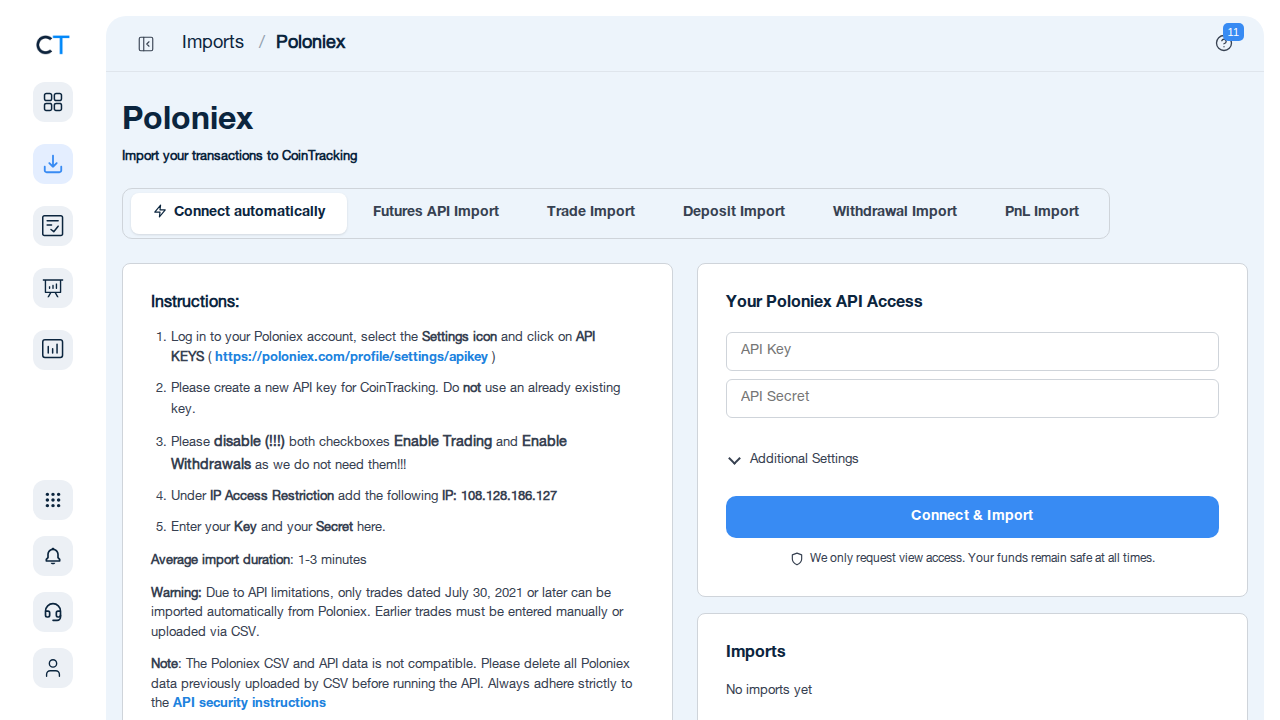
In your Poloniex account settings, generate a read-only API key and paste it into CoinTracking. Alternatively, export your transaction history as CSV from Poloniex (Activity → Trade History → Export CSV) and upload it. Both methods import your complete spot, margin, lending and staking history.
- 3
Review transactions and generate your tax report
Once your Poloniex data is imported, validate the transactions and generate a tax report for your jurisdiction. CoinTracking calculates capital gains, income and losses and formats the output for your country — ready for your accountant or tax return.
"CoinTracking can handle just about any complex transaction you can throw at it and the automation is a real lifesaver. Of all the tax software tools we've reviewed, CoinTracking is the most detail-oriented and has more accuracy checks in place than the competition."

How to Create Your Poloniex
Tax Report with CoinTracking
Three steps from Poloniex API or CSV to a tax report your accountant will accept.

Import your Poloniex transactions
Connect CoinTracking to Poloniex via read-only API key or upload a CSV export. All spot trades, margin, lending income, staking rewards, deposits and withdrawals are imported automatically.

Review and validate your transactions
Open Reports → Validate Transactions. CoinTracking flags missing cost basis, missing prices and unresolved transfers so you can correct them before generating your report.

Generate your Poloniex tax report
Select your country and tax year. CoinTracking generates a jurisdiction-specific tax report in PDF or Excel format, covering all Poloniex gains, income and losses — ready to file or hand to your accountant.





No. Poloniex provides a transaction history export that you can import into CoinTracking. CoinTracking then calculates your capital gains, income and other taxable events and generates a ready-to-file tax report for your jurisdiction. Poloniex itself does not issue tax documents.
Log in to your Poloniex account, go to Activity → Trade History, and export your transaction history as a CSV file. Poloniex also supports API access — generate a read-only API key in your Poloniex account settings and add it to CoinTracking's import area for automatic syncing of your full transaction history, including spot trades, lending, staking and withdrawals.
Yes — margin trade settlements are generally taxable as capital gains in most jurisdictions. The specific treatment varies by country: in the US, short positions may in some cases generate ordinary income rather than capital gain. CoinTracking imports margin data from Poloniex and handles the gain/loss calculation automatically. Consult a qualified tax advisor for the specific treatment of margin trading in your jurisdiction.
Poloniex is incorporated in the Seychelles and is not an EU-regulated crypto-asset service provider (CASP) subject to DAC8. The exchange does not automatically report user transaction data to EU or most other tax authorities. Tax compliance for all Poloniex activity is your personal responsibility — you are required to declare all taxable gains and income in your annual tax return.
Germany requires FIFO per wallet (§ 23 EStG); the UK uses Section 104 pooling (HMRC); in the US, FIFO or specific identification are common. CoinTracking supports FIFO, LIFO, HIFO and a range of other cost-basis methods. The correct method depends on your country of residence — CoinTracking applies the right rules for your selected jurisdiction.
Yes. CoinTracking supports Poloniex API integration. Generate a read-only API key in your Poloniex account settings and add it to CoinTracking's import area. CoinTracking will automatically sync your spot trades, lending activity, staking rewards and withdrawals. You can also upload a manually exported CSV if you prefer not to use API access.
Start Tracking Your Crypto Taxes Today
Experience why 2.2 million users trust CoinTracking — sign up today for a seven-day free trial!