
Bitcoin is the digital asset that started it all: a decentralized currency built to move value between people directly, without a bank, a payment processor, or a government standing in the middle. Launched in January 2009, it introduced a fixed-supply digital money secured by cryptography and a public ledger called the blockchain, and every cryptocurrency that followed builds on the model it created.
Bitcoin's price and headlines change by the week, but the mechanics behind it have stayed remarkably stable since Satoshi Nakamoto's 2008 whitepaper. This guide covers what Bitcoin actually is, how it works, what backs its value, and what to know before buying, storing, or reporting it on your taxes.
Key Takeaways
- Bitcoin is a decentralized digital currency that moves value peer-to-peer without a bank or payment processor in the middle.
- The supply is capped at 21 million coins, and more than 20 million are already in circulation.
- The 2024 halving cut new issuance to 3.125 BTC per block, tightening supply further ahead of the next projected halving around 2028.
- Gains from selling or spending Bitcoin are taxable in the US, with the rate depending on how long you held it first.
What Is Bitcoin?
Bitcoin (BTC) is a decentralized digital currency that lets people send value directly to one another over the internet, without a bank, a card network, or any other intermediary approving the transaction. It runs on a public, distributed ledger called the blockchain, maintained not by one company but by thousands of independent computers around the world that each keep an identical copy of every transaction ever made.
No single government, bank, or company controls Bitcoin. The network instead relies on open-source software that anyone can run, with rules enforced by consensus among participants rather than a central authority. Bitcoin's total supply is fixed at 21 million coins, a limit built directly into the protocol that, according to Bitcoin's own project documentation, cannot be changed without the agreement of the entire network. That fixed scarcity is a large part of why Bitcoin is often nicknamed "digital gold."
Where Bitcoin Came From
Bitcoin's design was first described in October 2008, in a whitepaper titled "Bitcoin: A Peer-to-Peer Electronic Cash System", published under the pseudonym Satoshi Nakamoto. Nobody has confirmed the real identity behind that name, and Satoshi stopped participating in the project in 2010. The network went live on January 3, 2009, when Nakamoto mined the first block, known as the genesis block. It embedded a headline from that day's edition of The Times of London about a second bank bailout. Many read that as a pointed comment on the financial system Bitcoin was built to route around.
How Does Bitcoin Work?
Bitcoin works through three pieces that depend on each other. A shared ledger lets every participant verify the record. A process called mining adds new, agreed-upon entries to that ledger. A system of cryptographic keys proves who controls which coins. Together, they replace the role a bank normally plays, without putting any single party in charge.
The Blockchain Ledger
Every Bitcoin transaction is broadcast to the network, bundled with others into a block, and added to the chain in chronological order once the network agrees it's valid. Each block cryptographically references the one before it, which makes the ledger tamper-evident. Altering a past transaction would break every block that follows it. That's a big part of why rewriting Bitcoin's confirmed history isn't realistic once enough blocks have piled on top. No single computer holds the master copy either; thousands of independently operated nodes each keep the full ledger, so there's no central server to hack or shut down.
Mining and Transaction Verification
Mining is the process that puts new bitcoins into circulation and confirms pending transactions. Computers compete to solve a computational puzzle using a system called proof of work. The first to solve it adds the next block to the chain and earns the reward. Our full guide to how crypto mining works covers the hardware, costs, and tax treatment in depth; the short version here is that mining is what keeps the network secure and new coins flowing without a central bank printing them.
Private Keys, Public Keys, and Wallets
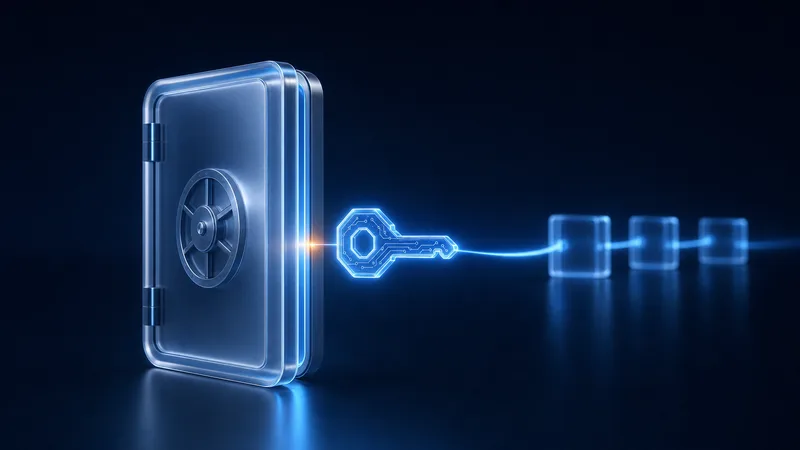
Owning Bitcoin means controlling a private key, a secret number that authorizes spending, paired with a public key used to receive funds. A crypto wallet stores those keys and lets you send and receive BTC. It doesn't hold coins the way a physical wallet holds cash, since every balance actually lives on the blockchain itself. Losing a private key with no backup means losing access to those coins permanently, and no company or support line can restore it for you.
All Your Bitcoin Activity in One Place
CoinTracking imports every Bitcoin transaction across your wallets and exchanges automatically, so you can see your real gains and losses at a glance.
What Gives Bitcoin Its Value?
Bitcoin's value comes from the same properties that have made scarce goods valuable throughout history: a limited, verifiable supply, divisibility, and a network of people large enough to make it useful. Unlike a national currency, Bitcoin's issuance schedule isn't set by a central bank and can't be expanded on demand.
- Fixed supply: only 21 million bitcoins will ever exist, and roughly 20.07 million are already in circulation, based on CoinMarketCap data.
- Divisibility: one bitcoin splits into 100 million smaller units called satoshis, so it works for both large transfers and tiny ones.
- Network effect: the more people, merchants, and institutions that hold or accept Bitcoin, the more useful and liquid it becomes.
New supply also keeps shrinking on a fixed schedule. The 2024 Bitcoin halving cut the block reward miners earn from 6.25 BTC to 3.125 BTC, and the next halving, currently projected for around 2028, will cut it again. That built-in scarcity is a big part of why Bitcoin gets compared to gold rather than to a fiat currency a central bank can print more of on demand.
Is Bitcoin Safe?
The Bitcoin protocol itself has a strong security track record. Cryptographic verification and a globally distributed network of computers make rewriting confirmed transaction history practically unrealistic once enough blocks have been added on top. That doesn't mean the code has been flawless. Developers have identified and patched a small number of bugs over the network's history. Because Bitcoin is open-source, anyone can review the code, which is part of why issues tend to get caught and fixed quickly.
The real risk sits one layer up, in how you store and access your own coins. Most reported Bitcoin theft happens through hacked exchanges, malware, or phishing scams targeting individual wallets, not through a break in the blockchain itself. Using a hardware wallet, enabling two-factor authentication, and never sharing your private key are the practical steps that address this layer of risk. No update to the Bitcoin protocol can undo a stolen password or a fake login page. Treat exchange balances the same way you'd treat cash sitting in a store's register rather than your own safe: convenient for active trading, but worth moving to a wallet you control once you're holding for the longer term.
How to Buy and Store Bitcoin
Buying Bitcoin directly usually means signing up with a cryptocurrency exchange, verifying your identity, depositing funds, and placing an order. Most exchanges let you buy a fraction of a coin, so you don't need a full BTC to get started.
- Choose a reputable exchange and complete identity verification (KYC), which most platforms require by law.
- Deposit funds and buy Bitcoin, in whole coins or fractions of one.
- Move your coins to a wallet you control rather than leaving them on the exchange long-term, and use a hardware wallet plus two-factor authentication for larger amounts.
If you'd rather not manage wallets and private keys at all, spot Bitcoin ETFs have given US investors indirect exposure to Bitcoin's price through a regular brokerage account since the SEC approved the first group of them in January 2024. Our comparison of Bitcoin vs. Bitcoin ETFs breaks down the control, security, and tax trade-offs between the two if you're deciding which one fits you.
Buying Is the Easy Part
Once you own Bitcoin across a few wallets or exchanges, CoinTracking imports the data automatically and keeps your cost basis straight for tax season.
Bitcoin's Price History
Bitcoin has gone through several full boom-and-bust cycles since trading began in 2009, each one larger in dollar terms than the last. Prices rose from fractions of a cent in the earliest days to tens of thousands of dollars per coin within a decade, with sharp, repeated drawdowns of 50% or more along the way. Anyone looking at a Bitcoin price chart for the first time should expect that kind of volatility as a normal part of its history, not an exception.
As of August 2026, Bitcoin trades in the mid-$60,000s per coin, with a circulating supply of roughly 20.07 million BTC and a total market capitalization above $1.2 trillion, according to CoinMarketCap. Its all-time high of roughly $126,000 was set in October 2025, per the same data. Because the price moves by the hour, treat any specific figure, including these, as a snapshot rather than something to rely on for a current decision, and check a live price source before buying or selling.
Bitcoin, Taxes & Legal Status
In the United States, the IRS treats Bitcoin as property, not currency, for tax purposes. Selling, trading, or spending Bitcoin is a taxable event, and any gain or loss is calculated against what you originally paid for it. Bitcoin held for more than one year before you dispose of it qualifies for long-term capital gains rates, which are typically lower than the ordinary income rates applied to short-term gains.
The rules get more detailed than that summary covers, especially once mining, staking, or business use enters the picture. Our full Bitcoin tax guide walks through the calculations, forms, and edge cases in depth.
Bitcoin is legal to buy, hold, and use across the United States, though it isn't legal tender the way the dollar is. Legal status varies considerably outside the US: some countries regulate Bitcoin closely, and a small number restrict or ban its use outright. Our guide to where crypto is legal or banned covers how specific countries treat it if you're outside the US.
Risks & Challenges
Bitcoin carries real risks alongside its upside, and mixing up the two is how first-time buyers get hurt. Price volatility is the most visible one: double-digit percentage swings within a single week are common, driven by regulatory news, macroeconomic shifts, and changing market sentiment rather than any change to the underlying technology.
Regulatory uncertainty is the second: rules around trading, custody, and taxation are still evolving in many jurisdictions and can change with little notice, which is also why the legal picture looks so different from one country to the next.
Security is the third, but it sits with you rather than the protocol, since exchange hacks, phishing, and lost private keys account for the large majority of reported Bitcoin losses, not a flaw in Bitcoin itself. None of these risks are a reason to avoid understanding Bitcoin, but they're a reason to size any position with money you can afford to see drop sharply, and to treat custody as seriously as the purchase itself.
Conclusion
Bitcoin remains what it set out to be in 2009: a decentralized way to hold and move value without a bank, a card network, or a government approving the transaction first. The core mechanics, the blockchain, mining, keys, and wallets, have stayed consistent for more than 15 years, even as the price, the regulatory picture, and now spot ETFs have changed around it. CoinTracking helps you keep an accurate record of your Bitcoin activity, whatever role it plays in your portfolio, for whenever tax season comes around.
Track Every Bitcoin Transaction in One Place
Import your wallets and exchanges, and CoinTracking calculates your gains, losses, and mining income automatically for over 2.2 million users since 2012.
Disclaimer
The information provided in this article is intended for general informational purposes only and should not be construed as financial, tax, or legal advice. Bitcoin's price, regulatory treatment, and tax rules change over time and vary by jurisdiction. Readers are encouraged to conduct their own research and consult with a qualified tax professional before making decisions based on the information presented here. The author and publisher are not responsible for any losses or damages incurred as a result of using the information in this article.